


Occupational Therapy Toys
Occupational Therapy Toys
Looking for occupational therapy tools you can actually use? This collection is built for pediatric occupational therapy working on fine motor skills, sensory processing, handwriting, visual motor integration, self-care, and self-regulation.
These tools are designed to keep kids engaged while supporting real skill development. Many options also work well for motor planning, bilateral coordination, grasp strength, scissor skills, and executive functioning. Shop our full selection below.
By Category
-

![Image]()
Fine Motor & Hand Strength
Tools to develop hand strength, dexterity, pinch grasp, and in-hand manipulation skills essential for functional tasks such as handwriting and self-care.
-

![Image]()
Sensory Regulation & Fidgets
Items that support sensory processing, self-regulation, and arousal modulation to help children maintain attention and manage sensory input during daily activities.
-

![Image]()
Gross Motor & Core Strength
Equipment for building core stability, postural control, balance, and gross motor coordination for improved endurance and functional mobility.
-
![Image]()
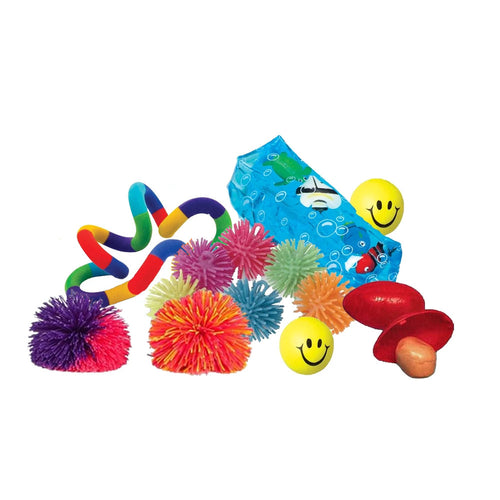
Executive Functioning & Transitions
Activities that promote executive functions including attention, task initiation, cognitive flexibility, and smooth transitions between activities.
-
![Image]()
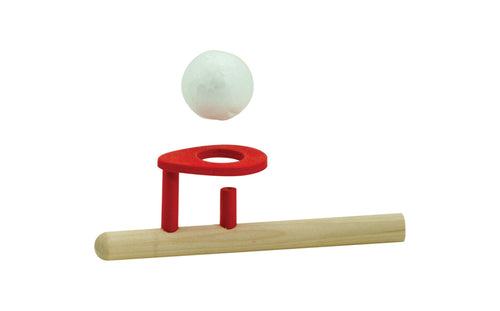
Oral Motor & Breathing
Tools to strengthen oral motor musculature, improve respiratory control, and support blowing, sucking, and breathing exercises for speech and feeding readiness.
-

![Image]()
Handwriting & Visual Motor
Resources to enhance visual motor integration, eye-hand coordination, spatial awareness, and pre-writing skills foundational to legible handwriting.


All Products


Frequently Asked Questions
What are occupational therapy toys?
Occupational therapy toys are play-based tools used to build skills kids need for everyday life. In pediatric OT, they’re often used to support fine motor skills, sensory processing, handwriting readiness, visual motor integration, self-care, and self-regulation — while keeping children engaged and motivated.
What are the best OT toys for fine motor skills?
Great fine motor toys create repeated practice of grasp, pinch, squeeze, and in-hand manipulation. Examples include
therapy putty, tweezers/tongs, lacing and threading sets, pop beads, pegboards, and building manipulatives.
Look for options that can be graded (easy to harder) and used in short, successful bursts.
What should I use to work on handwriting?
Handwriting support usually starts with prerequisites: posture and core stability, shoulder strength, hand strength, and refined grasp. Popular OT tools for handwriting readiness include therapy putty, pencil-grip strengthening tongs, fine motor tweezers, vertical surface activities, and visual motor games that build copying and spacing skills.
What OT toys support bilateral coordination?
Bilateral coordination shows up in cutting, dressing, handwriting, and sports. Toys that work well include lacing sets, threading activities, pegboards, nuts-and-bolts, building sets, and games that require one hand to stabilize while the other manipulates (like tongs + sorting, or stringing + holding tension).
How do I choose age-appropriate toys?
Start with the child’s skill level, not just their age. Choose tools that allow success quickly, then increase challenge by changing the size of objects, the resistance level, the time demand, or the accuracy requirement.
Many OT toys can be used across ages by simply grading how they’re presented.
What works well in school-based OT?
School-based OT often benefits from tools that are portable, easy to sanitize, and support classroom routines.
Examples include fine motor tool sets (tongs/tweezers), handwriting readiness tools, quiet fidgets, visual timers, and simple tabletop games that build attention, turn-taking, and motor planning.
What do you recommend for home programs?
Home programs work best with simple materials that families will actually use. Look for a few core items that covers multiple goals: for example a putty set, a tong/tweezer tool, a visual timer, and one
motivating game that targets visual motor or motor planning. Short, consistent practice is usually more effective than long sessions.
Are these tools only for therapists?
Not at all. Parents, teachers, and caregivers often use the same tools to support skill-building at home or in the classroom. If your child is working with an occupational therapist, it’s a good idea to ask which tools best match their goals and what “just-right challenge” looks like for them.
